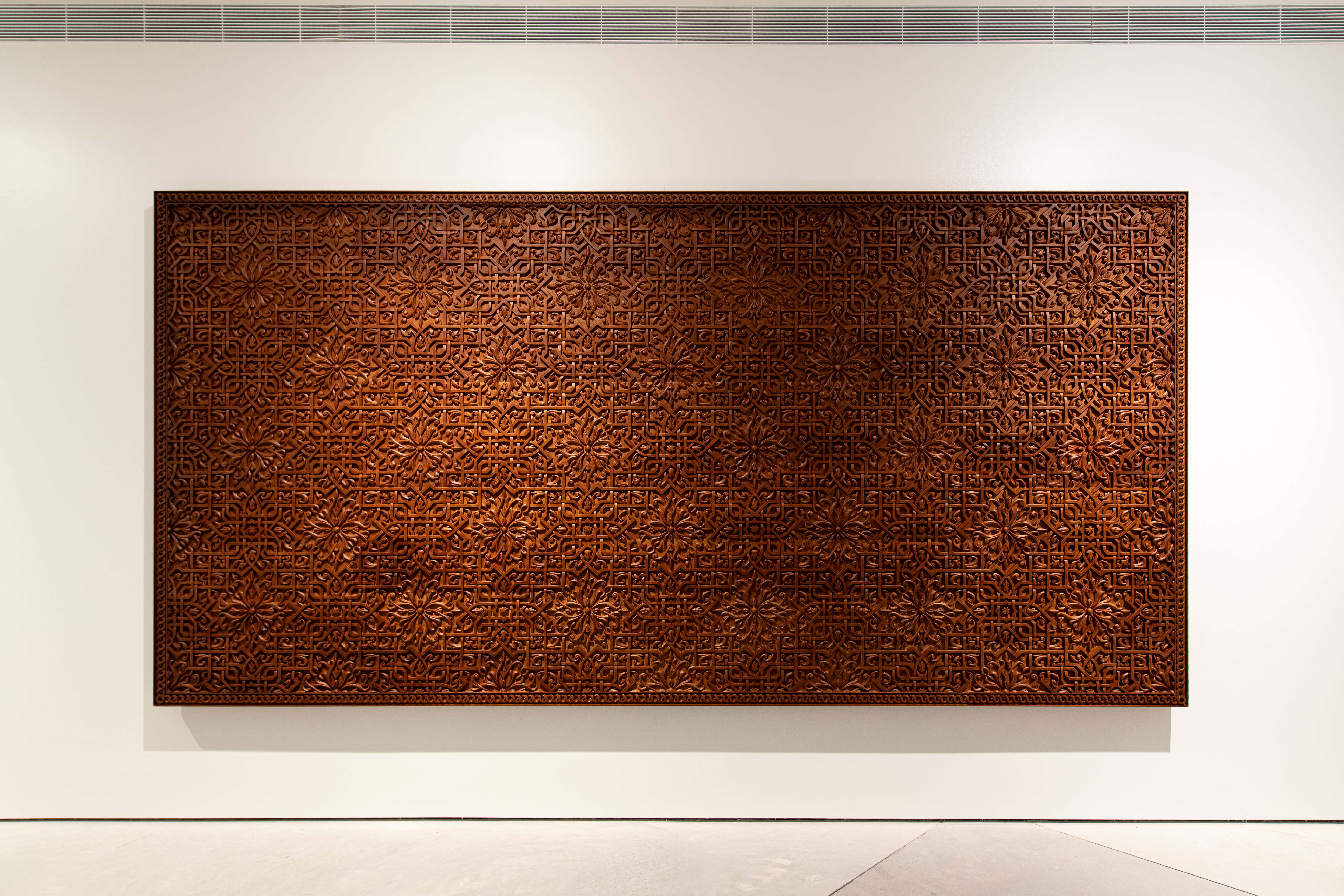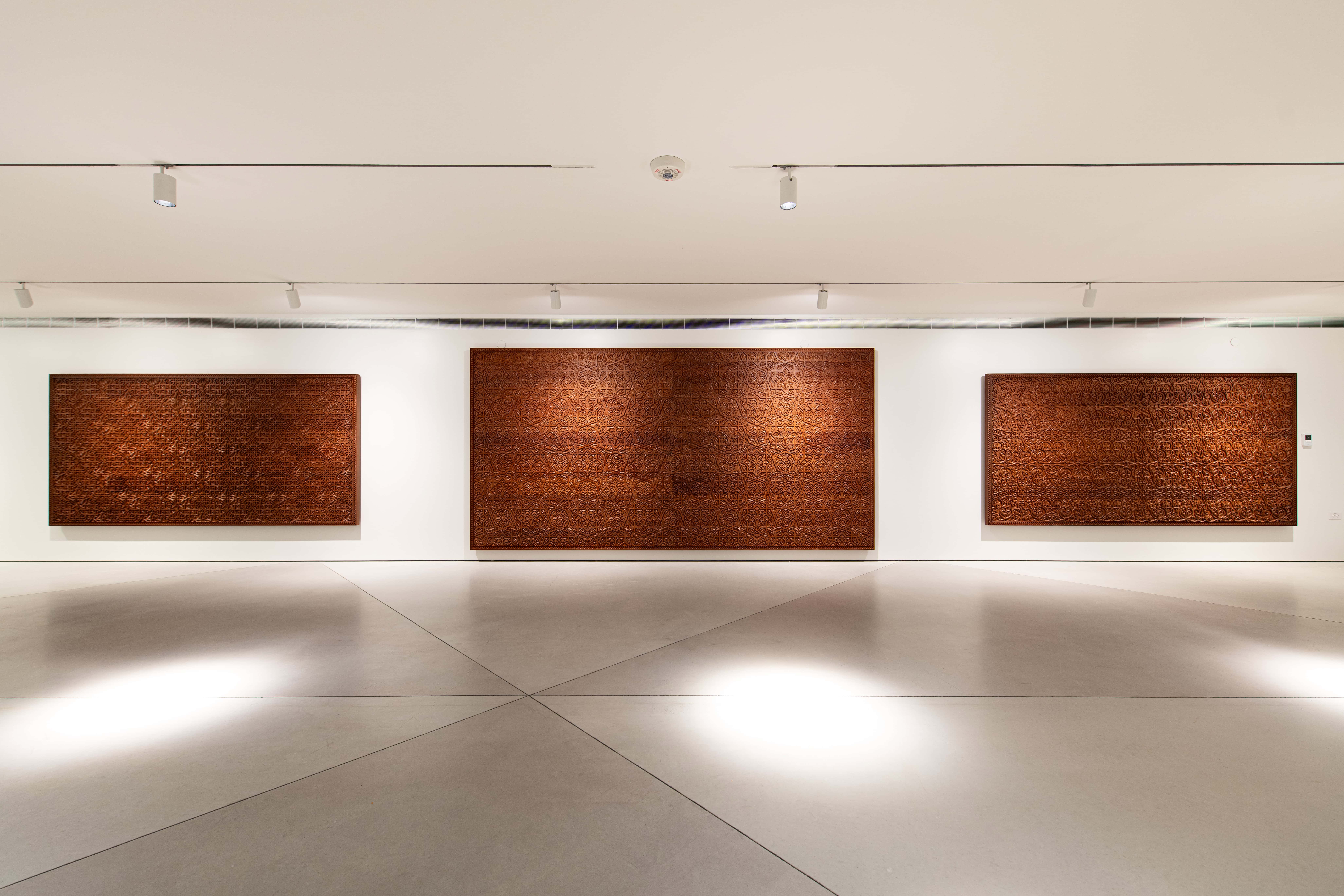
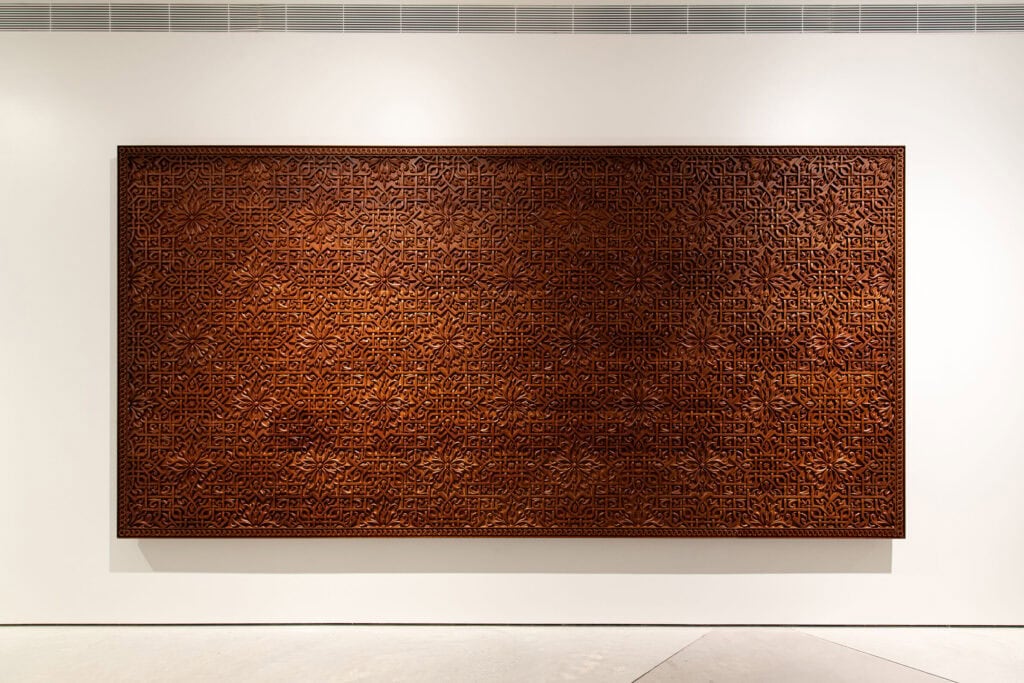
Conceived as a collaboration between artist Mohammed Adra, Senior Design Manager at the Aga Khan Development Network, and master woodworker, Hamza Zidan, these three panels showcase distinct design motifs that draw upon forms from the broad repertoire of ornaments found in traditional Islamic art and architecture. All of the designs are imagined as infinite, extending beyond the edge of the frame. Together they create a dynamic feeling of connection with Islamic architecture without a readily identifiable characteristic of place or time.
The largest panel takes inspiration from the central portion of a portable mihrab made during the Fatimid rebuilding of the Mausoleum of Sayyida Nafisa, ca. 1138–1147. Sayyida Nafisa (d. Cairo, Ramadan 208/January 825), great-granddaughter of Hazrat Hasan and wife of one of the sons of Jaʿfar al-Sadiq, is one of the most revered Muslim, historical figures in Egypt. The mosque-mausoleum complex that houses her tomb near Fustat remains a place of visitation and prayer. Known as ‘Nafisa al-ʿilm’ she is considered to have been a scholar of Islamic sciences, proficient in fiqh and a transmitter of hadith. The portable mihrab is preserved today at the Museum of Islamic Art in Cairo.