Deep Listening – Raheleh Filsoofi
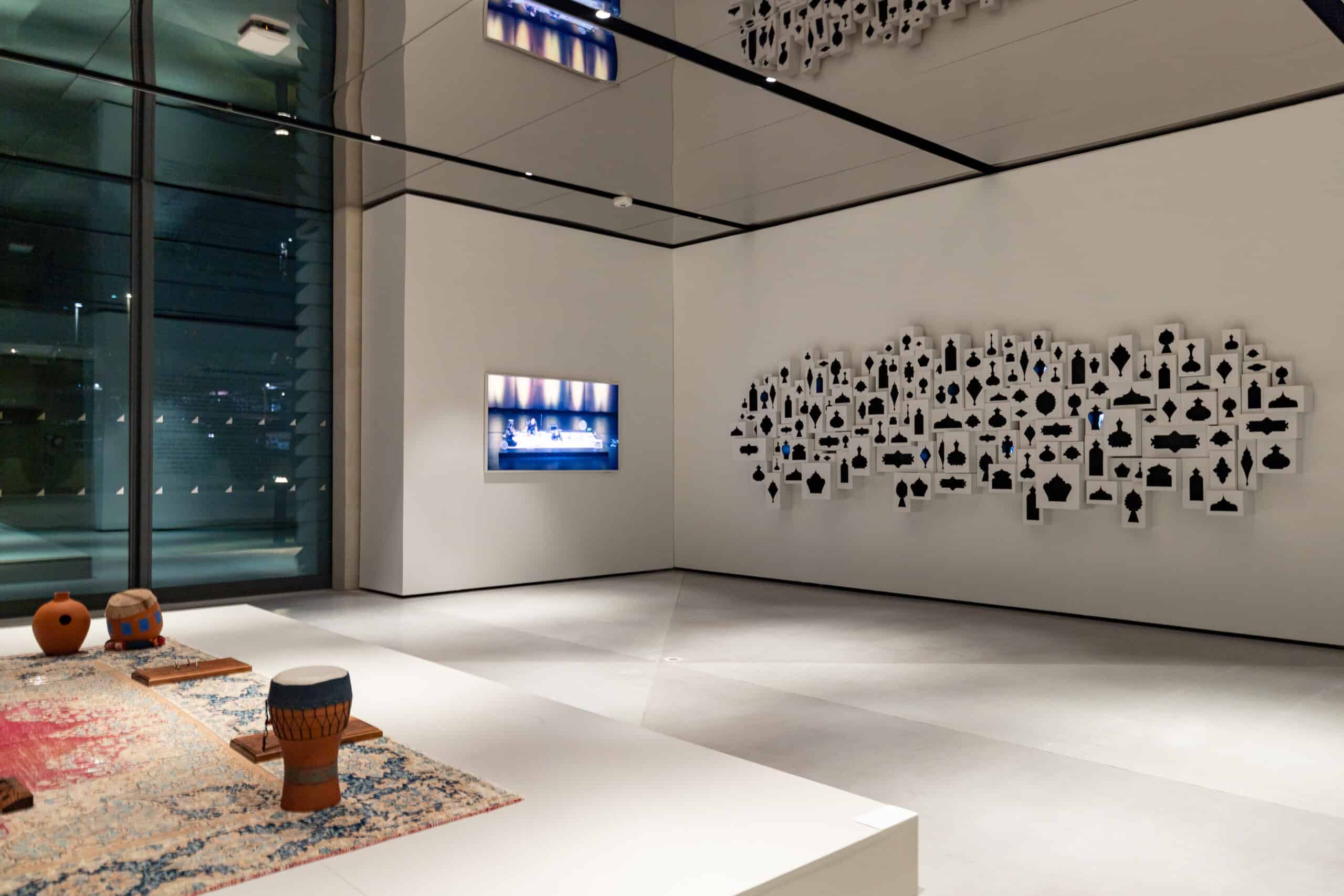
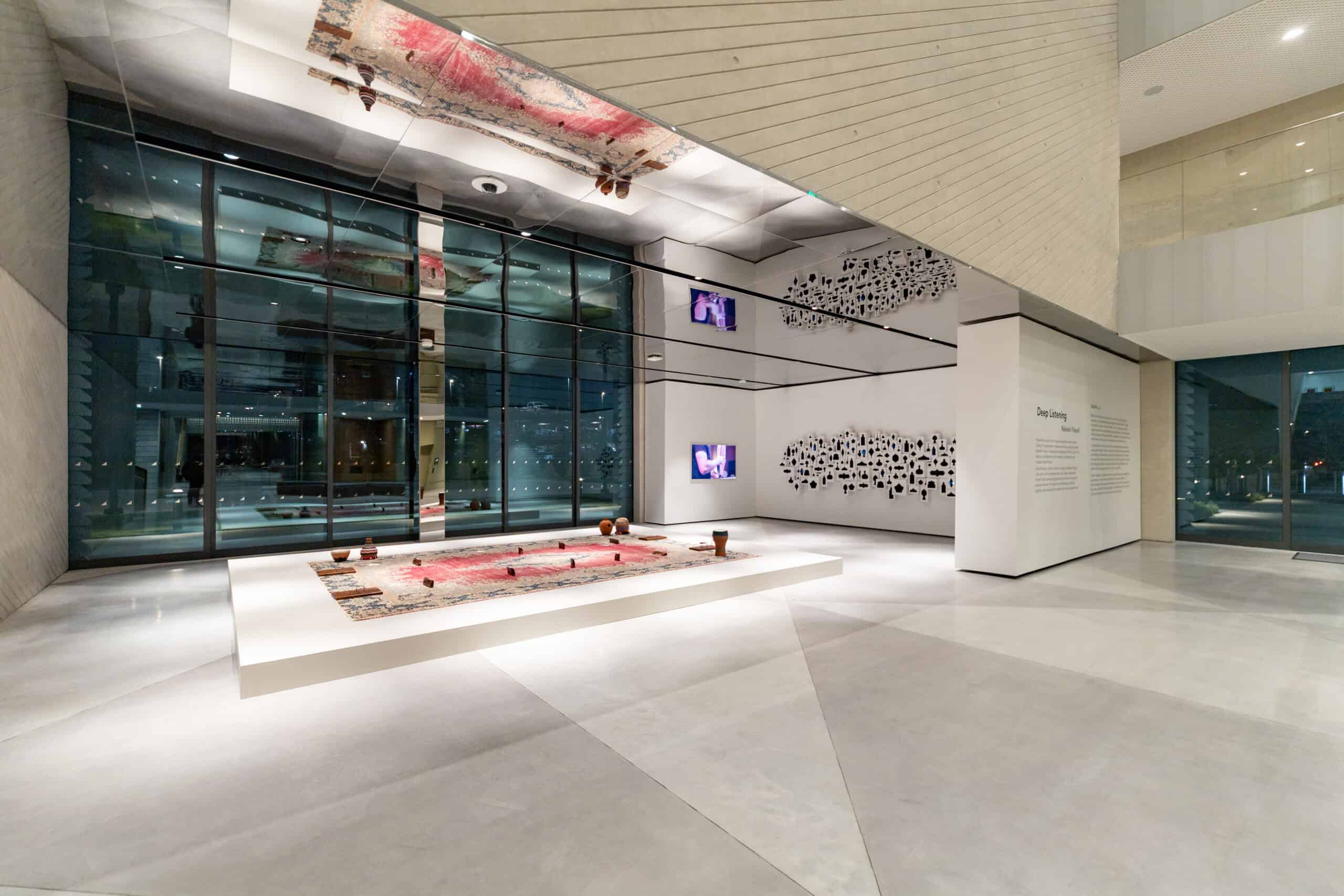
Presented as part of the inaugural exhibition at the Ismaili Center, this presentation features two major projects by artist Raheleh Filsoofi: Imagined Boundaries and ShahTár (شهتار). The latter is a collaborative work created in partnership with musician Reza Filsoofi.
Deep Listening – Raheleh Filsoofi
ShahTár (شهتار)
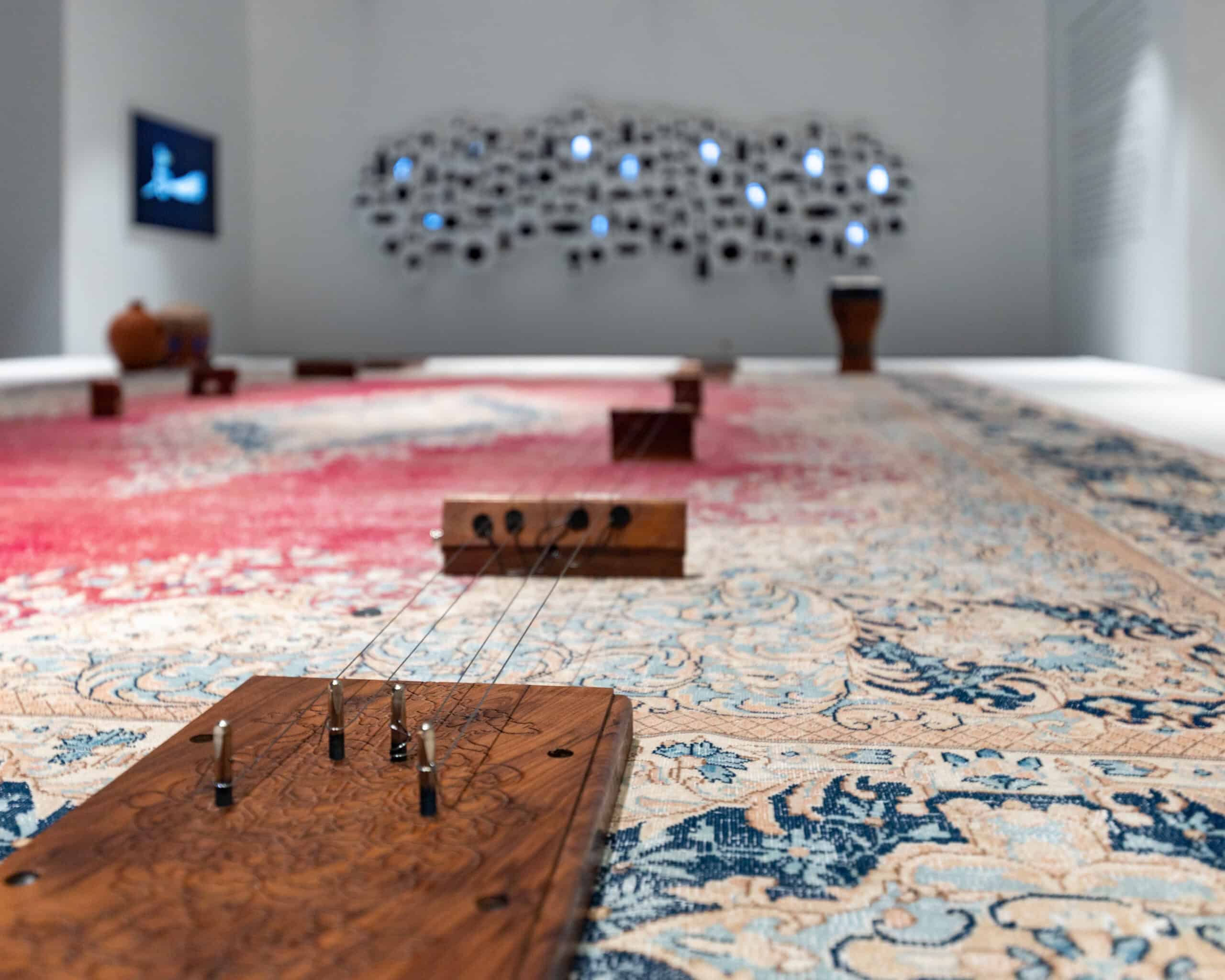
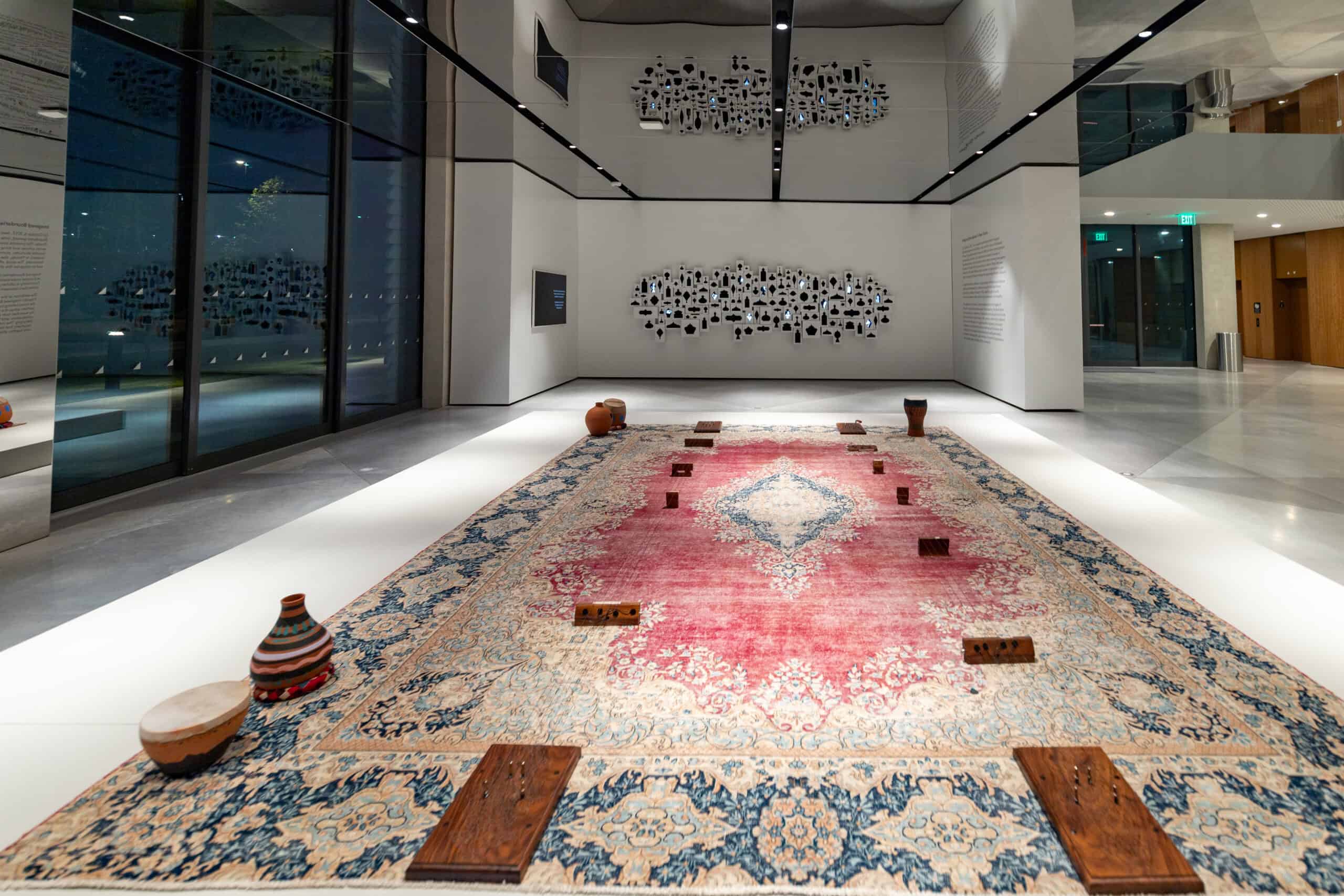
ShahTár, the Persian term which refers to a modern four-stringed musical instrument, is a collaborative project by Raheleh and Reza Filsoofi. Through the interactive platform instrument ShahTár (شهتار), audiences are invited to experience sound as a bridge between people and ideas. The work reimagines the life and legacy of Moshtagh Ali Shah, an eighteenth-century Iranian musician and Sufi mystic whose voice and innovations were silenced in his time.
Through performance, the project becomes a gathering space where sound, memory, and dialogue intersect. It explores how attentive listening can deepen understanding, foster empathy, and inspire social transformation. Participants encounter the evolving language of Iranian music and its capacity to harmonize with other global traditions, opening space for learning, collaboration, and reflection on the ongoing influence of sound in cultural life.
ShahTár transforms a traditional Kermani rug, historically a place of gathering and reflection, into a four-string instrument and communal platform. It accommodates both people and instruments, inviting collective participation in the making of sound. This hybrid creation honors Moshtagh Ali Shah and his enduring contribution to Iran’s spiritual and musical heritage.
Imagined Boundaries: A New Vision
On October 6, 2017, two companion exhibitions titled Imagined Boundaries opened, one in Tehran, Iran, and the other in Hollywood, Florida. The projects invited viewers to reflect on what connects people across cultures and time. Each installation consisted of a series of box-like structures, some containing video screens showing faces gazing outward. In Florida, the faces were Iranians, while in Tehran they were Americans. The work offered a quiet invitation to meet another’s gaze and to recognize the shared humanity that transcends inherited divisions.
Imagined Boundaries draws on a long tradition of intercultural dialogue and mutual understanding. It echoes the spirit of the Safa Khaneh Community in Isfahan, founded in 1902, which sought to build connections between faiths and peoples through conversation and empathy.
The exhibition at the Ismaili Center presents the fourth chapter of Filsoofi’s Imagined Boundaries series. In this iteration, the faces within the boxes belong to members and civil society partners of the Ismaili community across the United States. In this context, the notion of community is defined by more than faith alone. It includes multifaith spouses, civil society collaborators, and friends who share a common spirit of service and belonging. The individuals include educators, healthcare workers, volunteers, firefighters, police officers, and members of nonprofit organizations who together shape the fabric of the community.