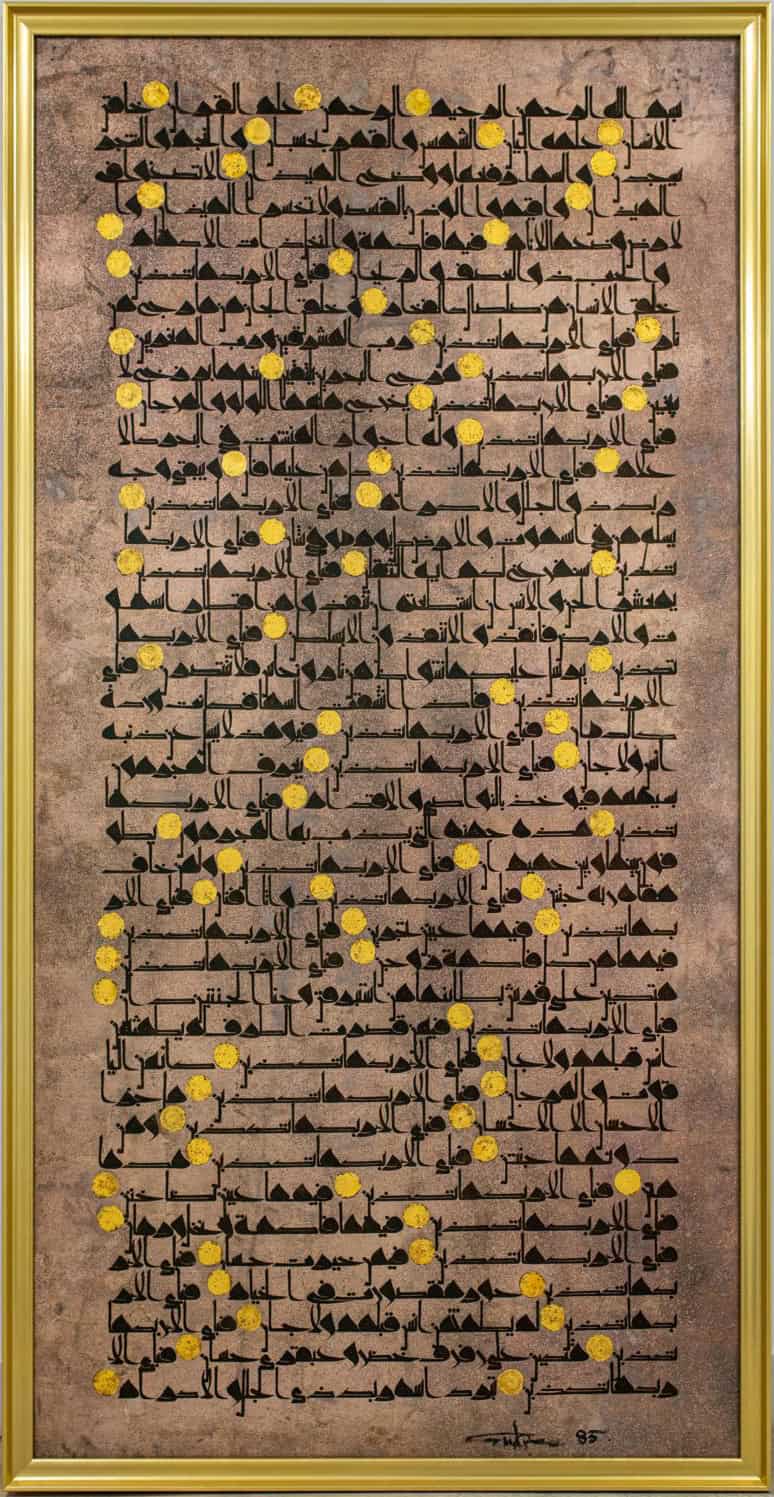
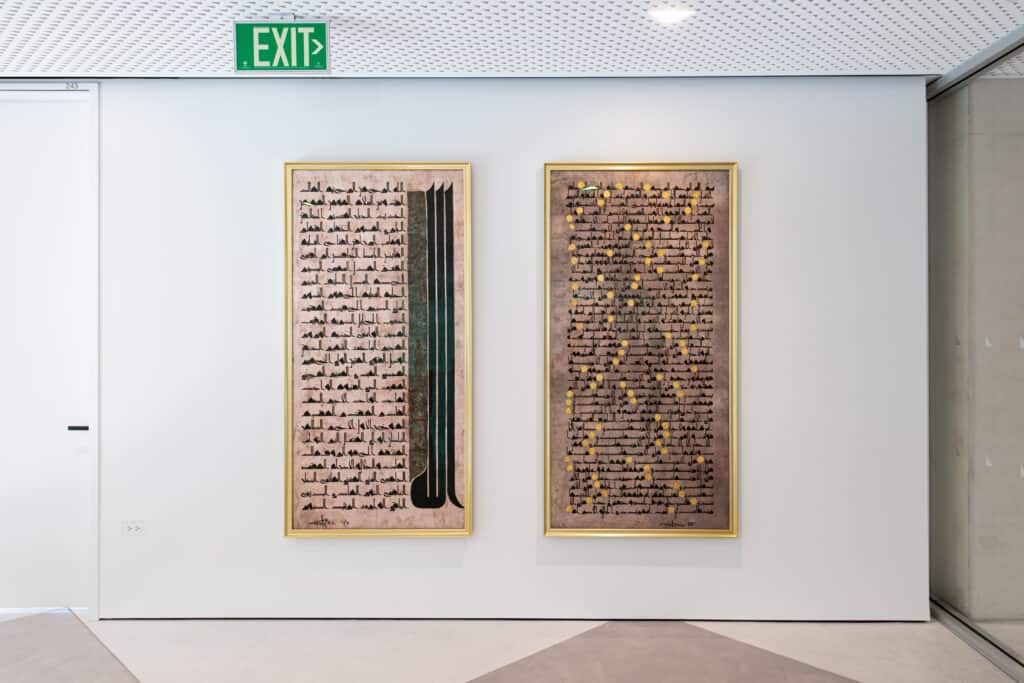
These two colossal calligraphic paintings of sacred texts by Ismail Gulgee reflect his searching modernist style rooted in antique traditions. Both represent a painterly approach, rather than a classical calligrapher’s approach, and create an atmosphere of presence, monumentality and timelessness. The first text, which comprises the whole of Surah al-Rahman (Q 55, 78 verses), believed to be one of the Meccan surahs and particularly beloved by the artist, describes Allah’s creation, justice and mercy. The script style is a variant of one of the monumental, ʿAbbasid-era scripts widely known as ‘Kufic’. Each ayat is marked with a large, gold ornamental disk made of applied gold leaf, creating an almost abstract rhythm of reflected light across the canvas.
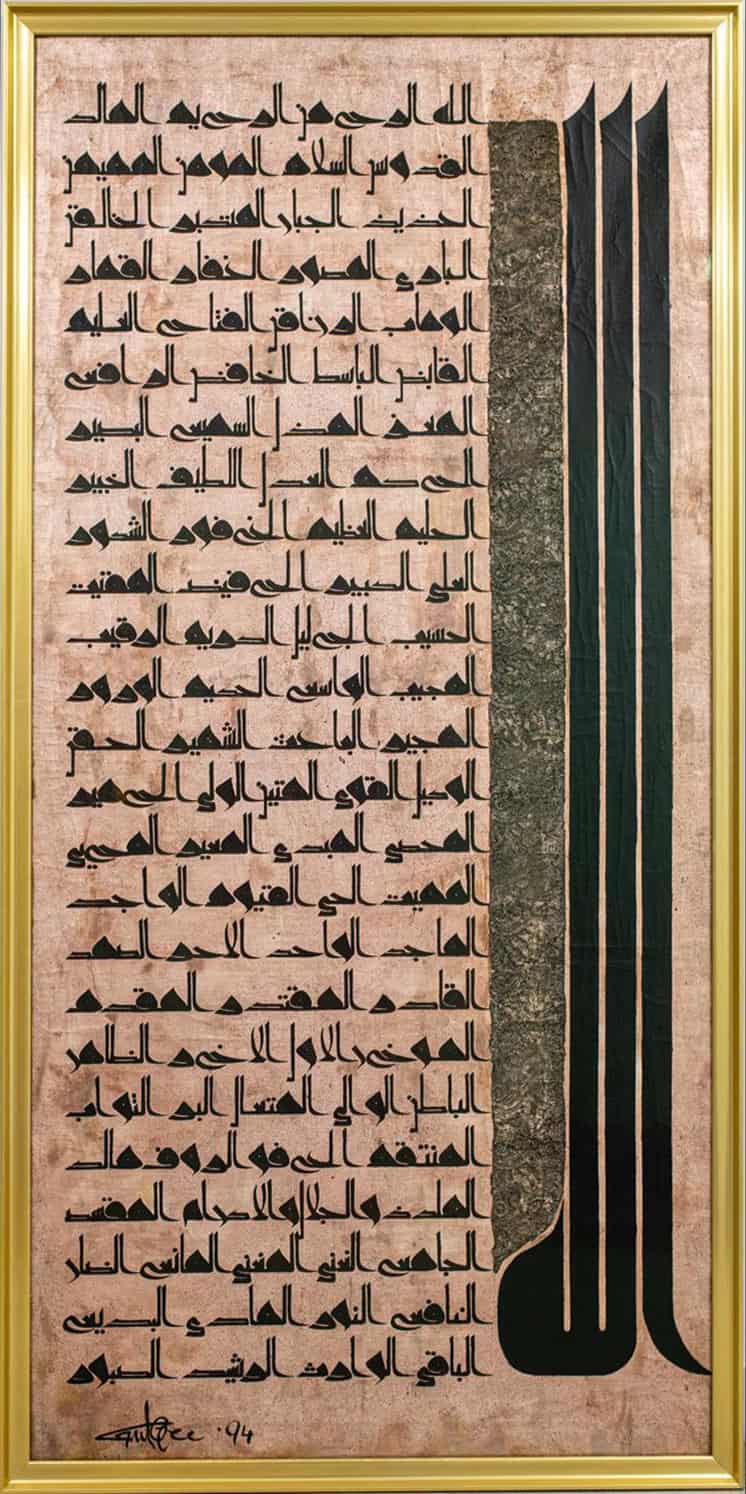
The second text, al-asmāʾ al-ḥusnā or Beautiful Names of Allah, is a devotional list of divine names and attributes that appears to originate with the Prophet (may peace be upon him and his progeny) himself according to several hadith, among them al Nūr (The Light), al-Hādī (The Guide), and al-Wahhāb (The Bestower). The painting invokes the feeling of a rhythmic meditation, as the Ninety-Nine Names are often memorized and recited with a tasbiḥ, each bead supporting the recitation as it moves against the fingers in time.
![99 Names of Allah [left], Surah al-Rahman [Right]](https://ismailicenter.org/wp-content/uploads/2025/10/99-Names-of-Allah-left-Surah-al-Rahman-Right-scaled.jpg)