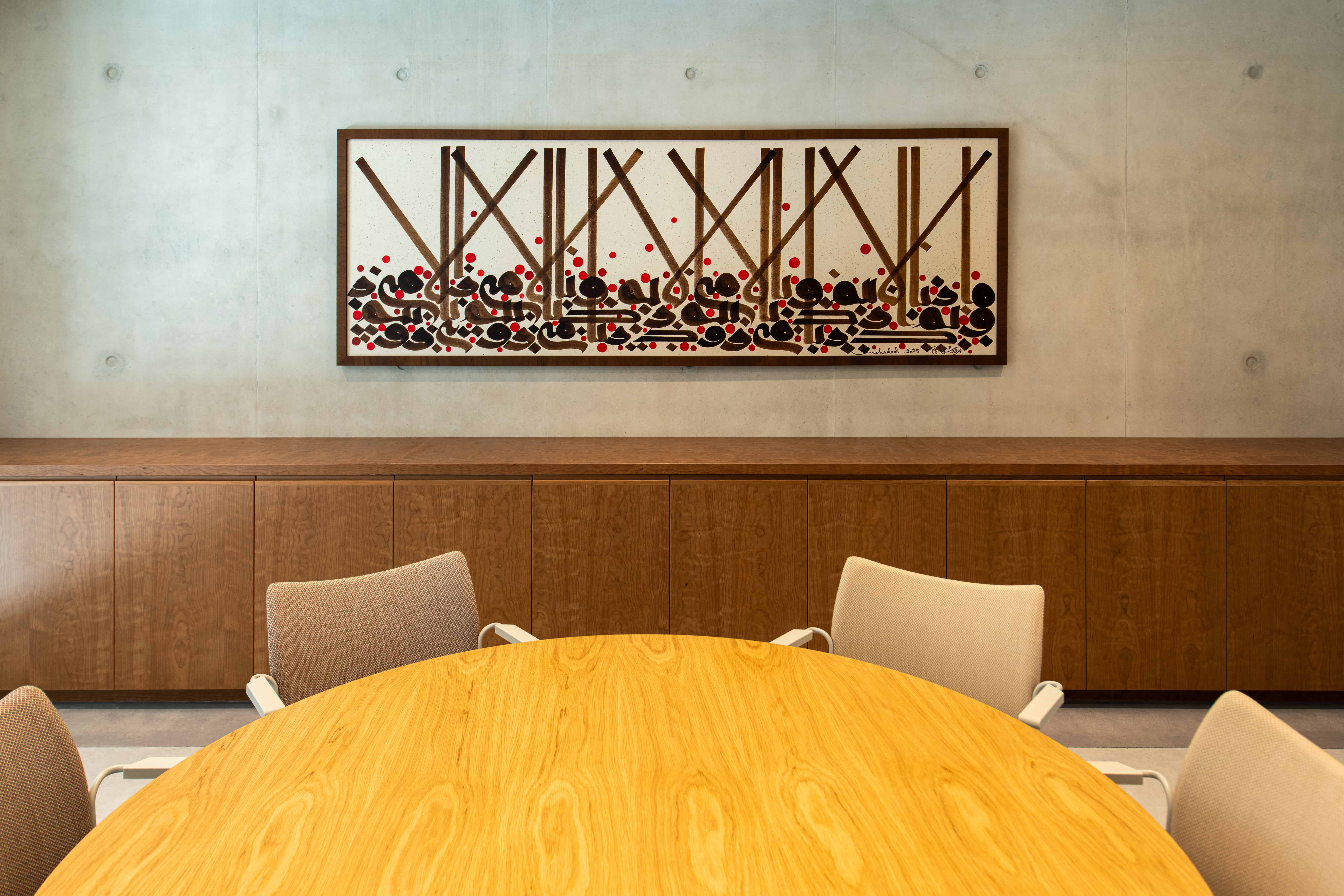

میور یم لااب و مییلااب ز ام
میور یم ایرد و مییایرد ز ام
We are of the sky, and to the sky we go
We are of the sea, and to the sea we go
From Ghazal 1674, Mawlana Jalal al-Din Rumi (1207-1273)
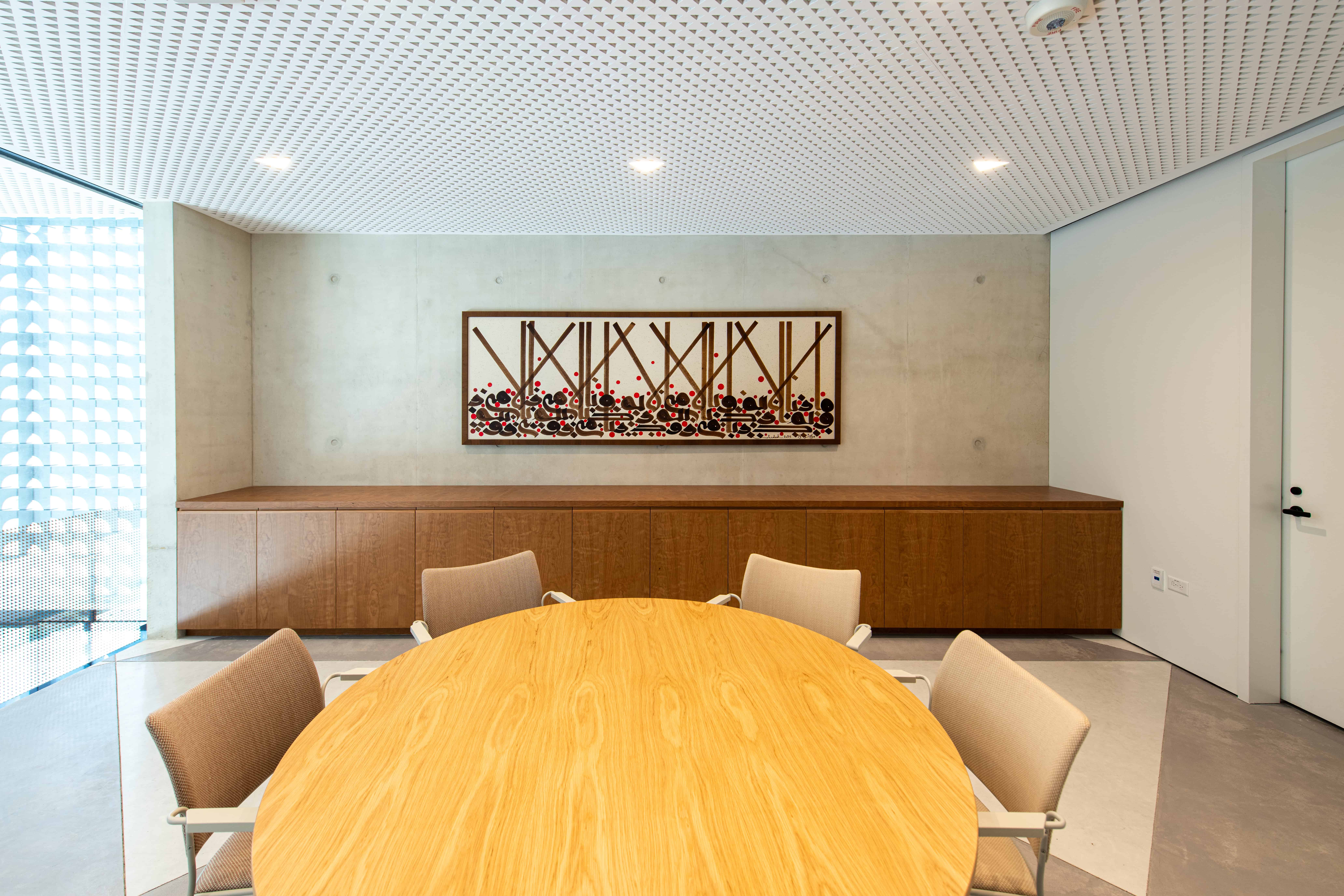
We Are of the Sky was commissioned for the Ismaili Center, Houston, a work emerging from Mehrdad Shoghi’s longstanding practice of calligraphy and particular affinity for monumental ‘Kufic’ scripts. His explorations of calligraphic forms in Persian generally prize presence over legibility, much like the ʿAbbasid letterforms themselves, developed chiefly for copying Qur’anic musahif and requiring expertise and memorization to read effectively. Here, a different effort is required, a consideration of metaphor, of sound, of symbol, and of an extraordinarily clear description of the path of the seeker. Shoghi takes us on a journey of contemplation. The verses cited in the painting are the first lines of a ghazal of Rumi, stand-ins for the whole of the poem—a ghazal of tremendous dynamism, each line ending in the syllables mī-ravīm ‘we go’. The bleakness and solitude encountered on the path “We are not from here, nor from there—we are from the placeless, and to the placeless we go,” is balanced with the solidarity of the community of seekers, it is always ‘we’ and not ‘I’ nor ‘you’. Shoghi’s graphic composition reflects the joining together of aspiring souls here on earth—the crowded landscape of letters in the lower third of the painting. The upper two thirds are different, the vast, limitless spaces above, connected through the verticals and diagonals of alifs and lams. There is movement upward ‘We are of the sky’, and then the descent to the interior ‘We are of the sea’, as Rumi describes, “Like a wave, we have risen from ourselves, and again, we return to ourselves in wonder as we go.”