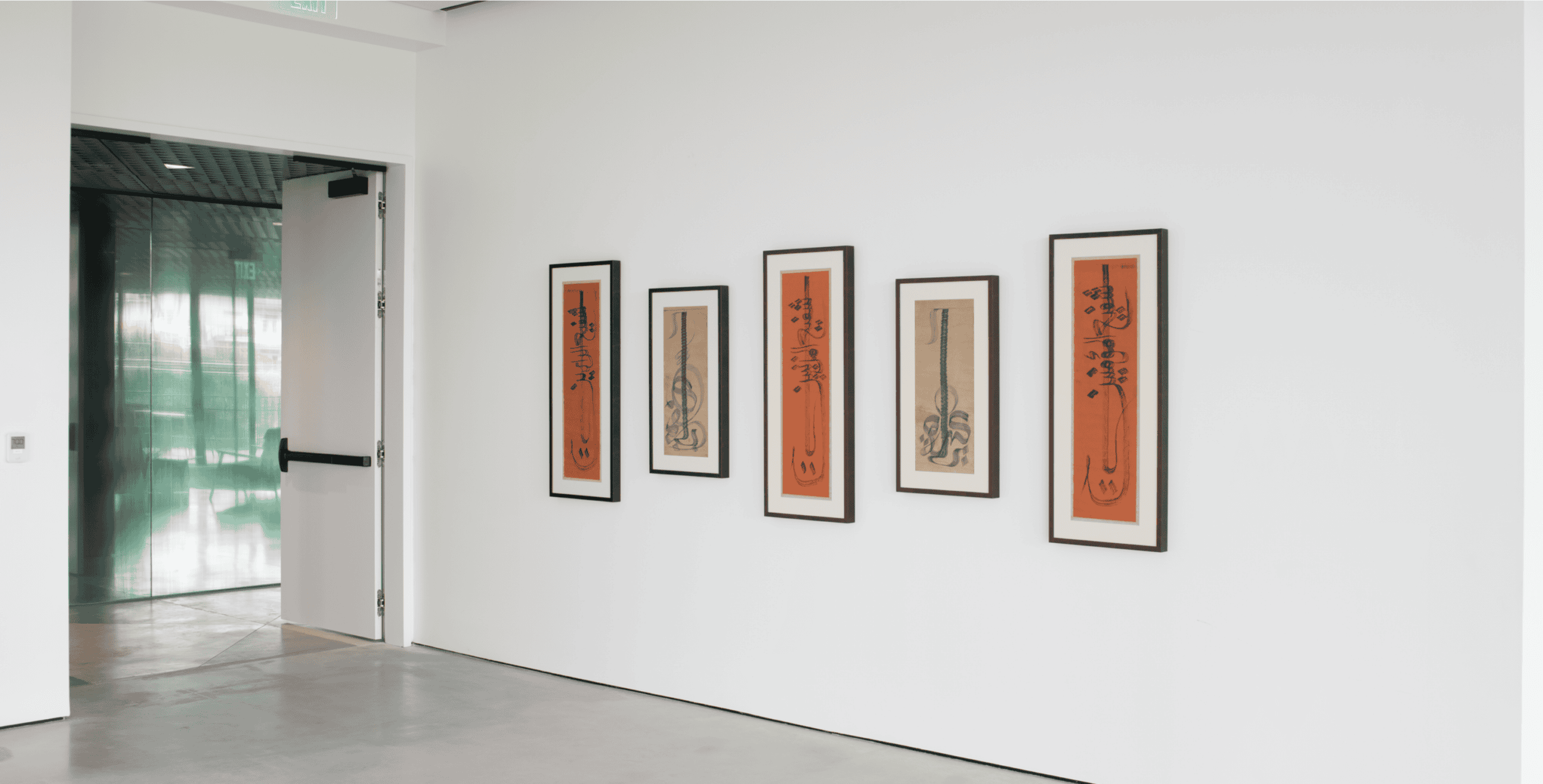
Located in the Ismaili Center’s reception hall are five Sini calligraphy works. Sini calligraphy is a distinctive style of Arabic script developed by Chinese Muslim communities, particularly during the Ming and Qing dynasties. It blends traditional Arabic calligraphic forms with the aesthetic sensibilities of Chinese brushwork, resulting in characters that are fluid, balanced, and often more rounded than other styles. Sini calligraphy is typically written with a soft brush rather than a reed pen, allowing for expressive, tapering strokes that resemble Chinese calligraphy. This amalgamation of Islamic and Chinese artistic traditions reflects centuries of trade along the Silk Road and stands as a visual testament to cultural exchanges in language, faith, and regional heritage.
1. Yā Shafī‘ ad-Dārayn – O Intercessor of both worlds
2. Yā Shafī‘ al-Mudhnibīn – O Intercessor of the sinners
3. Yā Shafī‘ al-Mu’minīn – O Intercessor of the believers
4. Ya Kafi – O Sufficient One
5. Ya Karim – O Most Generous